
We support you
Trying for a baby & fertility
Couple counselling
individual advice and investigation for fertility
Cycle monitoring
Support through the cycle to identify the fertile time
understand your own body better
When one wish becomes many questions
Trying for a baby is something very personal. For some couples a pregnancy happens quickly, while for others it takes longer than expected. That can feel unsettling and raise many questions – about your cycle, about fertility or about possible causes.
An illness is not always behind it when a pregnancy takes time to happen. It can still be useful to look more closely at the cycle and to recognise possible influencing factors at an early stage.
The following topics may be relevant, among others
- Course of the cycle, ovulation and fertile days
- Cycle monitoring by ultrasound and, where appropriate, hormone tests
- Possible hormonal causes of irregular cycles
- How age, previous conditions and lifestyle affect fertility
- Initial investigations when trying for a baby has not yet led to pregnancy
- Involving both partners and, where appropriate, further investigations
Our aim is to understand your personal situation better, to clarify open questions and to discuss together which next steps may be useful.
Frequently asked questions
Good to know
When should I have investigations if I have been trying for a baby without success?
If no pregnancy occurs within a year despite regular unprotected sexual intercourse, a medical investigation is useful. From about the age of 35, it can be advisable to seek medical advice after just six months. With very irregular cycles, known conditions or other possible risk factors, an earlier examination can be useful.
What happens in cycle monitoring?
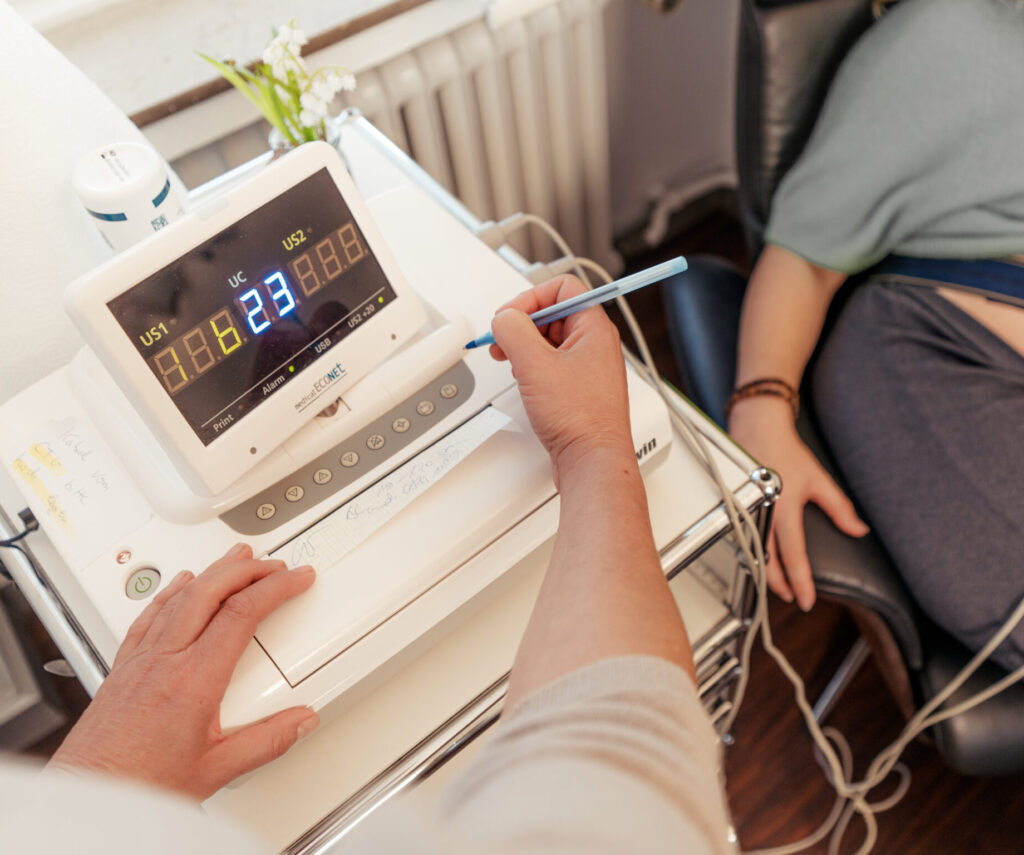
In cycle monitoring, we use ultrasound to observe how the follicles develop and how the lining of the uterus builds up. This makes it easier to estimate the time of ovulation and to assess whether the cycle is regular.
Can I have difficulty becoming pregnant even with a regular cycle?
Yes. A regular cycle is generally a good sign, but it does not automatically mean that a pregnancy will happen without difficulty. Alongside ovulation, the fallopian tubes, the uterus, egg quality and sperm quality, for example, also play a part. That is why, when you have been trying for a baby without success, we look at both partners wherever possible.
Which examinations are useful for fertility?
This depends on your individual situation. At the start there is usually a detailed conversation about your medical history and the course of your cycle so far and, where appropriate, a gynaecological examination and an ultrasound. Depending on the findings, hormone tests or further diagnostic steps may be useful. An assessment of sperm quality can also be important at an early stage.
What role does age play in fertility?
Female fertility declines with age, particularly clearly from the mid-30s. That does not mean a pregnancy is then no longer possible. The chances of a spontaneous pregnancy can, however, fall, and certain risks can increase. We advise you individually, without creating unnecessary time pressure.
What happens if the first examinations do not show a cause?
It cannot always be explained straight away why a pregnancy does not occur. In such cases we discuss whether further examinations are useful, or whether being seen at a specialist fertility centre could help. Which steps are appropriate depends on your personal situation and your wishes.